P M Fox's Reviews
All the reviews P M Fox has submitted for authors' ARC books.
| Book | Review | Offsite |
|---|---|---|
|
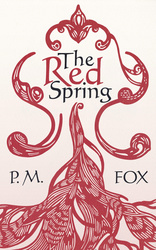
I just read through this again, having not touched it or thought about it for a year or so (I’m the nominal author of this book, so do bear in mind my slight bias) and I was moved to write a review. Before I do, I suppose I ought to disclaim my own disclaimer above and reveal something that I normally wouldn’t in mixed company. The Red Spring is a channeled text. I am a lunatic, both figuratively and in a rather more literal way than you might think, and this story was revealed to me over the course of about a year. My job was to write down what I witnessed to the best of my ability and to try my best not to make up any details. I believe this story to be true. I’m not attached to it in the traditional artistic sort of way, as I have been with other things that I have written. One interesting and relevant consequence of that is that it doesn’t stick in my memory. I’d forgotten almost everything about it when I began re-reading it last week. Double-disclaimer and procrastination complete, review begins: I loved it. I really did. I had to get over the nauseous feeling that it was in some way my own work, like I was stroking my ego (and of vomiting into my own mouth at my on-page eccentricities — why on earth can’t I finish a bloody sentence on time?) and like I was staring smugly into a mirror. But once I did, I remembered my friendship with Lizzy and how much I love her. We met under strange circumstances. She had no idea what to do with me and all I could do was adore her from afar. Her world is my world — that’s how and why we met — but her outlook, her grumpiness at puns, her wonder at language, her burning blood, her extraordinary orgasms, all came flooding back to me. I have criticisms. If you don’t like literary fiction or nature writing, you probably aren’t going to finish this book. When we were coming up with taglines, I amused myself for hours with, ‘For fans of lesbian sex, animism and alphabetised lists of bird species!’ Wouldn’t have worked, but I wasn’t wrong. More realistic, if horribly formulaic, would have been, ‘It’s the Wicker Man meets Tess of the d'Urbervilles!’ Much better… unless, like most people, you’re not interested in either of those things or you don’t know what they are. Then it just seems incomprehensible. The book is set on a small island and it moves at island pace. It’s not slow, not at all; it’s considered and it’s decisive. Islanders the world over are like that. At the core of the book is a love story — and, as I mentioned above, it’s a true story. Love moves like the sea: glassy smooth one moment, hurling you about the next. The build up is oceanic and mysterious, even to me. It swells; it’s not a constant rain of jolts. If you don’t like that, you’re probably not going to finish this book. To complete my compliment sandwich, The Red Spring has an ending. Like a real, actual ending. All the loose threads tie up (I think — let me know if they don’t and I’ll tell you you’re very clever) but not so tightly as to feel contrived. Like the storm to which the whole text is dedicated, it roars into its crescendo. I had completely forgotten how it culminates, and I actually set aside the book (I have a proof paper copy) and issued an expletive to an empty room. That’s it. I’m giving this book five stars out of a possible five because, well, I don’t have much choice. Read it if you care to, don’t if you don’t, stop reading it if you really don’t like it. But please tell me, if do you finish it, if you think Misses Hope and Forty have a sense of proportionality. They scare the crap out of me. |